
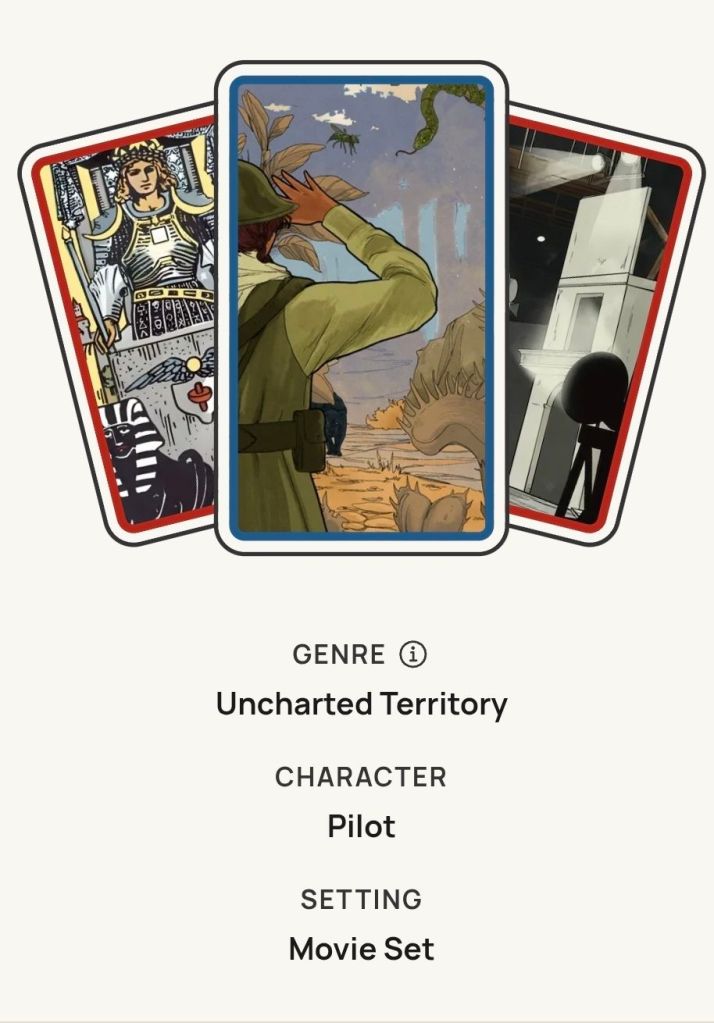
I come to, suddenly aware of shaking and noise.
Alarms are blaring, and the cabin is shaking so violently that it feels as though the cockpit would be ripped in half from the force. This stick-shaker forces me to take the controls, and I am working frantically to hold altitude, to address the alarms, and to stave off panic. I look out the window at the wing to see if there is any evidence of what caused this cacophony of sound and vibration.
There! I knew I smelled fuel! My fuel pressure gauge seems to be holding, but that won’t last long.
When did that happen? It must have been just before the cargo line broke, and I got hit in the back of the head by the D-ring. It must have knocked me out for a minute. Thankfully, the second strap is holding. Just barely.
None of this makes sense, and I know it, but I can’t figure it out right now. I’ve got to address the issue of finding a landing spot to better figure out what needs fixing. The “why” can wait.
I try to keep the nose steady; she wants to dive. But I can still hold her. Just a little longer. We can do this! Hold on! Frantically searching the forested landscape, I spot a line of open field running down the middle. A natural runway, though not nearly long enough. But I’ll take it! And fast, the fuel pressure warning is blaring, and the Caravan is fighting me. I stop fighting her, adjust the trim wheel for a glide, and work on lining up with the open stretch. I can see the earth coming toward me, so I lower the flaps a little. As I pull back on the yoke, I kill the battery and fuel selectors.
The sudden quiet is deafening, and for a moment, there is only stillness. It’s surreal as the plane floats into the glide. Such peace after so much chaos.
A small bob, and the plane continues to lose altitude.
I see trees closing in, and I’m afraid it’s too tight. This could hurt. I have a brief moment of fear for the supplies and the village that is supposed to get them.
My brain is trying to work out the landing, while my body is just responding from muscle memory.
The ground rushes up just as the wheels touch down. Pretty smooth, all things considered. But the trees are closing in fast, and I’m sure I’m about to lose a wing or two. Applying the brakes, I’m trying to control the speed and bring the plane to a stop when a tree looms up on my right. I hear the crack as it hits the wing about the same time that I am slung forward in my seat. The force of the impact slings the plane into a turn. Another crack, on my left this time, and I realize both wings have been hit. I won’t be flying out of here in this plane. But then I see a tree, and I’m headed right for it. I don’t have time to brace. I hear the crunch of the nose, and then everything goes black.
I wake to absolute peace and quiet. Everything is a blinding white light that slowly dims, and then I can see I am standing in the middle of a movie set. Part of my brain tells me to think harder about that, and another part tells me not to worry about it.
Eventually, I realize that I am not alone.
I turn to my left, and there is a man standing there with me. He is watching the movie crew as they bustle here and there with lights and props.
“You know, it’s always amazing to me that it feels like the first time I’ve seen it, every time.” His voice is a gentle, deep baritone.
“Where am I?” This movie set I am standing on, offers no clue. The crew are moving the plane wings, and downed trees off set. It’s a confusing scene. I just experienced a catastrophic wreck and now I’m watching pieces of the wreck be removed from a set? Didn’t that really happen?
He turns to look at me. “You, my friend, are with me now. You can call me A.”
I know instantly who I am with, and that I have died.
I don’t feel dead. But how would I know what dead feels like?
“You wouldn’t. It has never been part of your experience.” He doesn’t say this condescendingly. So others have experienced this? “Surely you’ve heard of those who have had near-death experiences?”
Yes. Yes, I have. I try to recall the stories I have heard but can’t think of any at the moment.
“Well, not to worry. Things work differently here, especially memories. You will have trouble remembering unimportant things.”
“I feel like that would have been important to remember.” I am a little put off by the thought that such a thing is unimportant. I have believed, for a long time, that I could end up here and would have welcomed any information that would help in this instance.
He shakes his head at me. “I’m sorry. Here, these types of things are ‘unimportant’. The important things here are the things that shaped you, the way you shaped others, and the impact you leave behind. Take, for example, Edward.”
My mind is immediately flooded with images of Edward, whom I knew when I was a boy. I only interacted with him when we were in elementary school. He moved away, and I never saw him again, rarely thinking of him in the years that followed. There was something different about Edward that invited the mean kids to pick on him, and he, in turn, would pick on other kids who were weaker than him. Somehow, we ended up friends. I couldn’t understand how he could be bullied and then turn around and do the thing he hated. I would always try to talk to him about not picking on the little kids. He never listened, though.
“Oh. But he did.”
I turn to look at A.
“Edward’s behavior toward younger, weaker children stretched your limits of compassion and empathy. Your behavior toward Edward gave him hope and comfort but also taught him kindness. He refused to let you see it for fear that you would think less of him. But he grew up and used all that information you gave him.”
Immediately to my right, a new set appears. There in the center is Edward, a grown man, in a boardroom of some sort. On the edges of the set, people are filming, moving props, or setting up lights. On the set with Edward are four or five men and women around a table. Edward stands at the head, giving a presentation. One lady at the table is just as bright and vibrant as Edward, but the others are muted. The workers on set are all muted as well. My mind is trying to make sense of the scene.
The lights drop and the scene fades from view. The crew on my set is moving the remaining plane parts off set, sweeping debris away and rolling in a new backdrop. This one of a cemetery.
“Edward moved away – that you know. But when he started school in the new town, he patterned himself after you. He saw how you considered others first – experienced it firsthand – and put it into practice at his new school. He grew up to be a very compassionate man who now –“ he stretched his hand toward the set, “works to bring in money to help kids in horrendous circumstances. One of those children is Mateo.”
My mind is immediately flooded with images of Mateo. I just met him a couple of months ago on a supply run. In fact, I was taking supplies to his village when I ended up here. Mateo has juvenile diabetes and needs insulin. His village is remote, and the non-profit I fly for supplies his insulin. I met Mateo on my last run. He is a happy, seemingly normal kid who apparently has not always been so.
Lights come up and a new set appears, but now it’s Mateo in his village, running with the other children. Mateo is bright and vibrant, while the other children are muted. Except for one other boy who shines as bright as Mateo. Again, the movie crew is muted but working behind the scenes.
“So you are saying that Edward, whom I helped, is helping Mateo, whom I am helping. That’s pretty circular. I didn’t even know Edward is involved with the non-profit.”
“Edward isn’t looking to be promoted. He is looking for the non-profit to be promoted. He is looking for the children to be helped, not for glory himself.”
The lights dim and the scene fades from Mateo’s set, while all the crew on my set are running around calling out directions to each other. There seems to be some urgency.
My brain is trying to work out the things I’ve just seen. And I have questions.
“The other people who were lit up. The lady in the boardroom, the boy with Mateo – these are the ones who have discovered their purpose.” A answers my unspoken question, and I turn to look at him.
“What about the movie set? Why a movie set? What about the ones behind the camera or working on the set?”
A shrugs. “When you are leaving a site, after delivery, and someone inevitably thanks you, what do you say? What is the quote you use?”
I suddenly feel bashful. Seriously?
“Yes, Joseph. Seriously. What is the quote?”
“All the world’s a stage, and everyone merely players, including me.” I feel uncomfortable with that admission. It feels like a brag, or like I was being flippant. It was never meant to be that, but here it feels different.
“But it’s not,” A says. “Not really. And it is true, in a way. Plus, I knew the motive behind it. I heard your suppression of glory for yourself every time you said it. Your sole purpose behind what you do is to help. That has always been true for you. That didn’t change as you got older. Your quote, your saying it, was a way for you to redirect the spotlight away from yourself. And I saw that. Every time.”
Suddenly, the lights come up on my stage, and I see myself in the center of the set, while the real me is standing behind the camera. Gone is the cemetery and there is a generic atmosphere. There is almost a blank canvas feel to the set. This is a constantly flowing, moving set, like the AI video I saw recently, where the younger version of an actor is approached by the older version of himself. Only in this case, it’s me. And I am constantly morphing. The elementary version of myself talking to Edward, through junior high interactions, to high school confrontations, college accolades, to work experiences, to this last supply jump. I watch as the me on set takes a bow, and the lights go dim.
A is standing in front of me.
“Shakespeare’s Jacques said, ‘All the world’s a stage… and one man in his time plays many parts.’ The important thing is what you affect while playing those parts. Shakespeare’s realm was a theater stage, but a movie set works just as well, don’t you think, for today’s world? But you, Joseph, have managed to skip all the even-numbered parts. You went from Infant to Lover to Justice and missed Schoolboy and Soldier all together. I would also like you to miss ‘Pantaloon’ – it’s such a ridiculous name for that stage. Please miss the Crusty age. Stay in Justice for a while and then go straight to Old Age.”
“Well, I can’t really do that, now can I? Since I’m here with you, I mean.”
“Weeeeelll, actually,” A grins at me.
A blinding flash erupts, and I close my eyes against the brightness.
I hear the crunch of metal and open my eyes to the tree coming straight at the nose of the plane. I am strapped in the pilot seat like I was before I met A. But this time it is different. The tree is off-center and not coming directly at me. Still, it is quite a thud. But also different in that it felt slower, nowhere near the speed it was before. I have a headache, but is that from the D-ring, the crash, or the blinding lights?
I don’t know whether to laugh or cry.
Am I really back?
I can’t quit thinking of what A said.
Stay in Justice. Skip to Old Age. Avoid Crusty.
My first step is to go find Mateo and get him his insulin. Then I need to go meet Edward again.
Well, the first step is to get out of this plane and get my bearings.
Then I have to get back to Justice.
Official Word Count: 2184
 Stand up, be heard, be kind!
I enjoyed reading this! Rising panic and all 🙂
LikeLike
Thank you! It helped to know a pilot! 😁
LikeLike
😂
LikeLike